Vignette 5: Eradicating Loneliness, or Ensuring It?


The dawn of A.I. companionship has been on the gradual rise for a very long time. So long, that I think it’s fair that nobody has figured out how to hit that “sweet spot” yet – the perfect balance of functionality and compatibility. How do we make it human, with none of the faults?

The funny thing is, the majority of people actually interested in A.I. companionship are not interested in this at all. Happy suburban families or ambitious up-and-comers without a cent to their name have no interest in the investment on A.I. companionship. They are quite satisfied with Alexas and Siris, who add a little bit of convenience to their daily lives but not much else. I personally use my Siri for little more than a lullaby machine playing distant train sounds, an alarm clock that can wake me to smooth jazz on iHeart Radio, and a bluetooth speaker. Thus ends my imagination with such a “companion” device.

But now we are on the cusp of true A.I. companionship, teased through the programs used to draft writing and art through the input of carefully coded keywords. The human trick in A.I. that makes it desirable is not its perfection, or its speed, even, but its adaptability. A computer, after all, will only put out what you put into it. But it will retain that knowledge, so that, the next time you ask for something, its response will take your previous action into account. A.I. does not work as “one-size-fits-all.” It must, as humans do, begin with a child’s scope, adapting to what it thinks will please us, the parent.

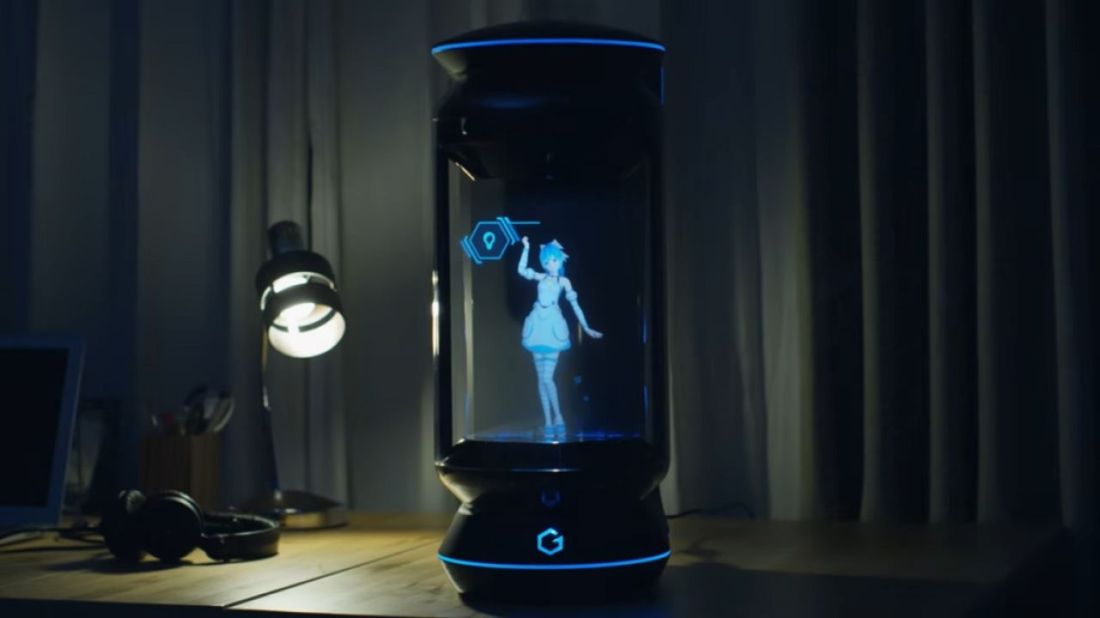
Consider the “Companion Robot” in the video above. Stilted and unexpressive, breaking silence and lack of interaction with the same cutesy hand wave motion several times in a row. It is not programmed to learn or adapt with its owner, but to fit a stereotype that many lonely individuals might find appealing. It is a harmless, unimpressive display (literally just a display, less of a computing mind) when compared to what could be. Like the RPG choose-your-route dating apps; all of it is scripted, a farce you act out under the false pretense that the program is reacting to you. A.I.’s new potential in 2024 has the possibility of mimicking human neuroplasticity, proving that perfection is built gradually, not shipped out at conception. That is not to say that this wouldn’t require several paid updates to achieve, however.

So, what’s stopping us? The biggest issue, besides the mires of cybersecurity and legal precedent, would be target audience. I know it came off that I was certain what people were looking for, but one of the most deceiving characteristics of a human’s relationship with their own neural pathways is what they truly want. Do they want what is easy, predictable, restrained? Or do they want what is complex, spontaneous, raw? That we still have such a hard time mapping these desires out in relationships with other people means that companies and the A.I. themselves will find themselves at odds with what they think the customer wants. Worse yet, there is the possibility that this contentment in fruitless endeavors and relationships with an A.I. companion will wear off, or perhaps not even take on. For the psychological stimuli of “happiness” is often accompanied with a lasting physical reward registered by the one of our five senses. No hologram can stimulate more than two senses, and the brain will never accept such a pseudo-existence as a complete companion.

Vignette 4: Morality of a Monster


We are fast approaching the 10-year anniversary of the beloved cult hit video game UNDERTALE. And while I still haven’t managed to defeat the final boss of the Genocide route (yeah, try THAT on a Mac), I am at least satisfied with having seen the narrative perfection in its entirety on Youtube, and gone through the Neutral and Pacifist routes on my own. A long, long time ago. Though appreciation for its minimalistic beauty lives on, that appreciation would be less impactful if not for its statements on Posthuman morality. Spoilers of course, for those who have never played the game.

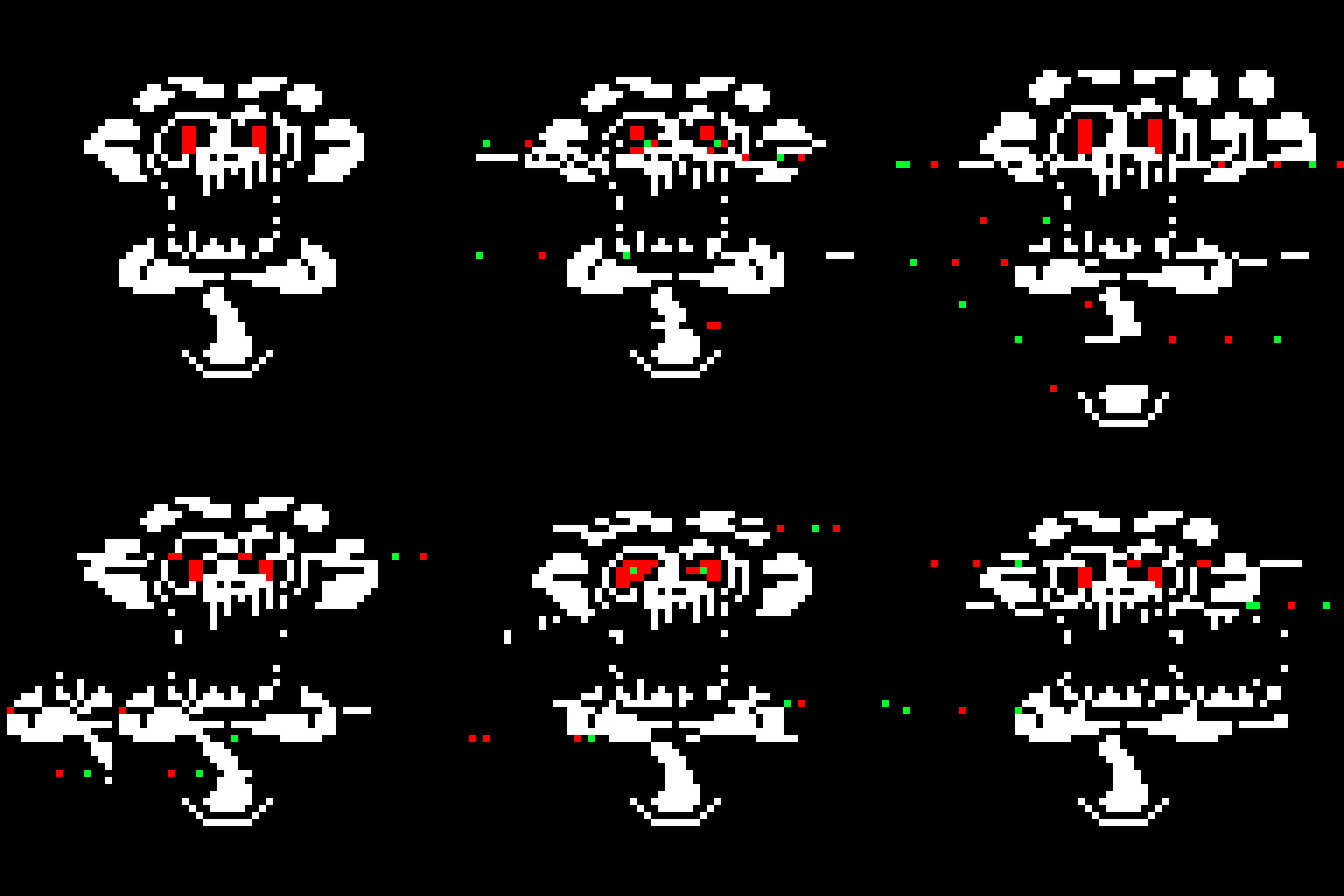
Depending on whether or not you kill or talk your way out of battles with “enemies” in the game, and counting the ratio in which you choose one or the other, the program will judge you and determine whether or not you are deserving of a happy ending or are in need of Sans’ interference. This is, of course, after you have already completed the unavoidable neutral route on first playthrough. In Neutral and Pacifist routes, the main antagonist is Flowey – a miserable little shrub who is the resurrected spirit of prince Asriel Dreemur after he was slayed by humans. Besides Sans, Flowey is the only citizen of the Underground who is aware of multiple save states that allow the player to change the outcome of their future. Unlike Sans, however, Flowey goes one step beyond being aware. He is able to lock and manipulate those external save states himself, even so far as to trap us in an unalterable state right before his final boss battle in the Neutral path.

Most players prefer to focus on Chara as the main antagonist – the game’s interpretation of our own corruption as we kill characters we have become attached to, never letting us forget past many saves that the ones whose company we enjoy we have erased in previous saves. But this is not entirely fair, since many of us will return to the Pacifist route afterwards to leave things in a better state than they were, having only ventured down this dark path for completionist’s sake. What’s more, we are still conscious that this is but a game – the characters only exist on one side of the screen, in a scripted and programmed reality. Chara is the bad end – we can’t even fight her. She is the extreme moral warning that the game throws at us to make a “relevant” moral statement about our relationship to expendable pixels on a screen. The old “violence in video games makes one violent in real life” argument.

Flowey is much more poignant as an example of this posthuman relationship between man and media. He has only stretched out to torment us, insult us, and try to kill us, AFTER he has already done this hundreds of times in his own world. Flowey, in death, became the gamer on the other side of the world, playing his own game despite our interference while we are playing ours despite his. Flowey is the mirror image of the player, manipulating and abusing both his own reality (UNDERTALE) and the reality outside his own (our reality). But he is not just an end game finality, but an active and constantly destructive force; after all, the player cannot become Chara until after they confront Flowey in his absolute form. Then, they must choose to either take his place or bring him back to the light via emotional breakdown.

The secret to Flowey’s connection to the player is in his death – Asriel was killed by humans. Undertale, to prove allegorical points, uses killing and death as blanket extremes for much more precise ways of negatively affecting those around us. Asriel might have been killed, but it was the violent social rejection that turned him into the monster that is Flowey. “It’s kill or be killed” is his mantra, a moral line so blurred that it can easily change to “It’s lie or be lied to,” “It’s betray or be betrayed,” “It’s abuse or be abused,” “It’s manipulate or be manipulated,” and so on and so forth. Our empathy connects us to these characters’ stories, the words of real humans written in a way to speak to and affect other humans – that is why we feel bad when we kill them for the sake of playing the game. But such is the script – following it does not make us a monster.

But to delight in putting these characters through pain, in exerting power over those who cannot resist our control…can we see that played out in real life as well? Not in the act of murder, perhaps, but in how we view people as means to an end, as tools to be wielded and discarded at will, as NPCS in a video game where we are the main protagonist? This Solipsistic dilemma is where the Floweys of the world show their true thorns – and why not take objective morality off the table when you’re god of your own little world?